Showing posts with label A Mighty Fortress Is Our Blog. Show all posts

Wednesday, August 30, 2006

The Spiritual Discipline of Public Transportation

1 I appeal to you therefore, brothers and sisters, by the mercies of God, to present your bodies as a living sacrifice, holy and acceptable to God, which is your spiritual worship. 2 Do not be conformed to this world, but be transformed by the renewing of your minds, so that you may discern what is the will of God—what is good and acceptable and perfect. Romans 12:1-2 (RSV)

I have been blessed with a long commute.

I ride the bus every morning for thirty minutes to a Metro station and then I ride the Metro for another twenty or twenty-five minutes before arriving at Farragut North and walking the couple blocks to my office.

It might sound strange to hear me describe my long commute as a blessing, and, indeed, for many months I thought of it as a curse. I’m going to share with you the story of why I changed my attitude about commuting.

When I first moved to the Washington, D.C. area, I lived in an apartment close enough to work that I could walk there in about thirty minutes. Walking to work was a nice way to start the day. Later, I moved to a house further away, but near a Metro station within thirty minute ride from work. Three years ago I moved again, this time into a house in the middle of suburban nowhere, well beyond walking distance and not near a Metro station. However, I am on several bus lines. For more than a year, I rode the bus every workday morning, sometimes reading, sometimes just looking out the window, but usually resenting that I couldn’t have slept in just a little longer.

Then sometime last year I decided that I would make better use of the time and start doing daily devotional readings. I began using The Upper Room magazine that Foundry provides in the narthex. So for several months my morning routine became get on the bus, read a bit of scripture and a brief inspiring message, and then dig out a book or magazine to read for the rest of the ride.

Earlier this year I began praying after I had done the devotional reading. Now, the devotional reading does end with a brief prayer, but I don’t think reading the one or two sentence prayer really counts. I wasn’t getting into the spirit of prayer within those couple of lines.

Up until that time, I had been the kind of person who prayed only when led to do so. That means that for the most part I prayed during church on Sunday mornings. I had been thinking for some time of taking up daily prayer. I figured that it would do me some good. You see, I have been carrying around a lot of hurt and unresolved anger. I have also had anxieties that need to be relieved. I knew, instinctively, that I needed to spend some time every day in the company of God. I needed to pray, but I did not have the praying habit. Developing new habits isn’t easy. Distractions and old ways of doing things get in the way.

My commute has created the perfect opportunity for me to read scripture and pray every day. I have now built into my day plenty of time free from distractions. Indeed, there is little else that I could do with the time.

When I pray, I do a bit of talking: I thank God for my son, for my friends and family, I ask to be transformed, I recount my sins and ask forgiveness, and I ask God to intercede in other people’s lives. But I don’t do all the talking; I also make a point of spending a few minutes sitting silently listening to God. So far God hasn’t had anything to say, but I do enjoy the silent time we spend together.

Occasionally I put off reading the Bible and I don’t get around to praying before my commute is over. Now when I skip my devotional reading or praying it seems like I haven’t really started the day right. I haven’t cleared my mind. I’m anxious and distracted. Starting my day with the Bible and with prayer helps me get through the day, and I’m praying because I’m riding the bus.

Now if I could just find something to do on the ride home.

Friday, June 09, 2006

Irreverent Humor

This is one of my favorite jokes:

A crowd was preparing to stone a woman who had been caught committing adultery.

Jesus tried to stop them by saying, “let whoever is without sin among you, cast the first stone.”

Just then a stone came flying from the back of the crowd and struck the woman.

Jesus blurted out, “Mother, I’m trying to make a point here.”

Monday, March 20, 2006

The Maryland Avenue Project


Since starting this blog, I’ve been receiving press releases in my e-mail from now three different organizations. I assume that these are being sent to me in hopes that I will write about the releases. Perhaps someone has been spreading advice that to create buzz about your organization you should court bloggers to write about you.

The Lisner Auditorium at George Washington University has been sending me releases about upcoming shows. I haven’t been to any performances at the Lisner, much less blogged about any, but I won’t rule out doing either of those. I also have been receiving releases from DC Vote, an organization I’ve had some involvement with and whose mission I support. I haven’t blogged about them either, but I probably will in the future. Most recently, I’ve begun to receive press releases from the Institute for Religion and Democracy. If IRD is hoping that I’ll blog about them then they are about to get their wish, but they aren’t going to like what I have to say.

In their own words, IRD works “to reform the social and political witness of the American churches, while also promoting democracy and religious freedom at home and abroad.” I’m all for second part of that statement, at least on the face of it, but it is the first part that I have a problem with. IRD has targeted for what they call reform the United Methodist Church, the Episcopal Church, and the Presbyterian Church (USA).

IRD’s stated goal is reform of mainline churches. The policies of the mainline churches are the business of their members and their members alone. What really bothers me about IRD is the presence of outsiders on its board of directors and its use of outside money. At least six of the seventeen board directors are not members of the denominations targeted by IRD. The Rev. Richard J. Neuhaus, Michael Novak, Dr. J. Budziszewski, George Weigel, Mary Ellen Bork, and Dr. Robert P. George are all Roman Catholic, but IRD is not trying to reform the Roman Catholic Church. Its efforts are focused on three protestant denominations plus the National Council of Churches, and the World Council of Churches. The Roman Catholic Church isn’t a member of either NCC or WCC.

Others have written about IRD, most notably Leon Howell who authored United Methodism@RISK, A Wake Up Call. Howell documented the network of groups working to drastically change the United Methodist Church. Most of these are groups composed of members of the church. While I disagree with their agenda, I can’t deny that as members of the United Methodist Church, they have every right to pursue it. IRD has connected the money of the political right with the right-wing activists in the denominations it has targeted in order to silence the progressive social advocacy of the mainline denominations.

From Howell’s book, IRD’s agenda is to influence the governing bodies of the mainline denominations to oppose feminism, gay rights, abortion, environmentalism, hate crimes legislation, and the social safety net. IRD also supports the war on terror and the war in Iraq. IRD’s tactics include: sample resolutions to be introduced at annual conferences and General Conference; recruiting and training delegates for annual conferences and General Conference; recruiting and training candidates to run for church leadership positions; provoking church members to bringing charges against clergy on accusations; and using press releases to spread misinformation and smear church leaders.

Howell also details the financial connections between IRD and the philanthropists and foundations that typically fund right-wing secular causes. IRD has received millions of dollars from Richard Mellon Scaife, the John M. Olin Foundation, the Lynde and Harry Bradley Foundation, the Castle Rock Foundation, and the Fieldstead Foundation.

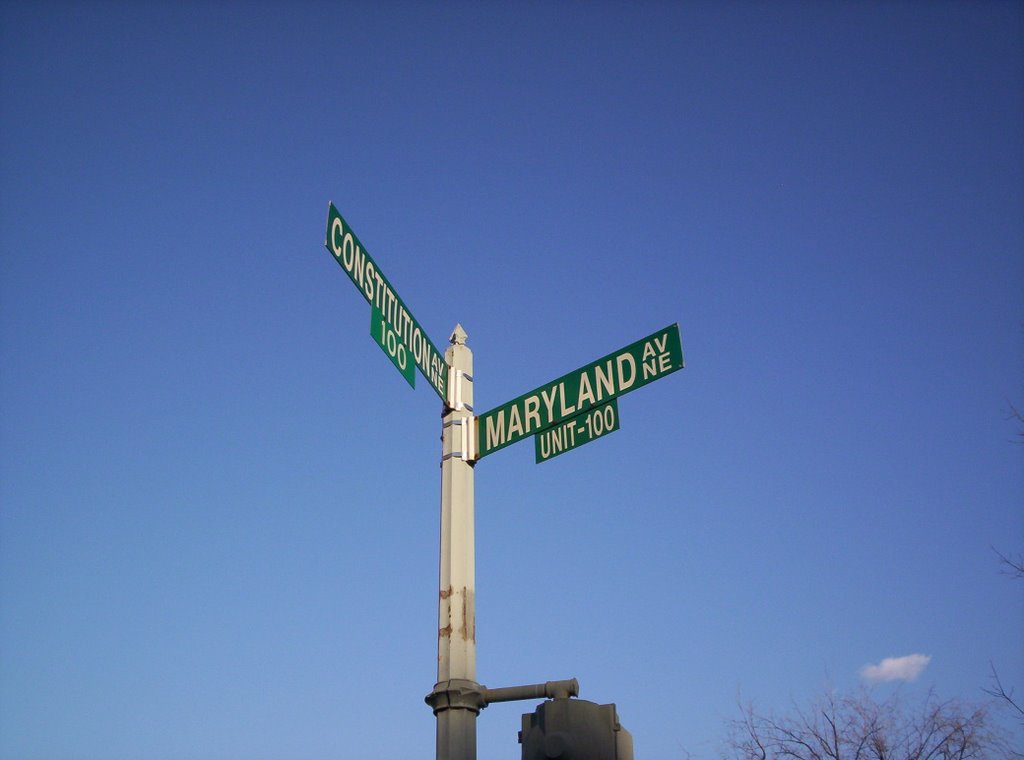
As it happens, the three denominations targeted by IRD, and the National Council of Churches, have their public policy and advocacy offices in either 100 or 110 Maryland Avenue Northeast in Washington, D.C. One hundred Maryland Avenue is the United Methodist Building and 110 Maryland Avenue next door is additional real estate also owned by the United Methodist Church’s General Board of Church and Society, the public witness and advocacy agency of the United Methodist Church. In fact, over 40 denominations have their offices in those two buildings. Just like Tom Delay had his K Street Project to put his loyal associates in positions at lobbying firms located mostly on K Street, IRD appears to be conducting a Maryland Avenue project for the right to neutralize the support for a progressive public policy agenda by mainline churches. Not satisfied to have the support of evangelicals and fundamentalists, the right wants to shut down any opposition on its agenda from the religious mainstream.

So, IRD, thanks for the press releases. Keep them coming. I want to keep tabs on what you’re trying to do to my church.

Monday, March 13, 2006

Church leads effort for fairness in congressional representation

March 8, 2006

By Mark Schoeff Jr.*

WASHINGTON (UMNS) - For many years, Foundry United Methodist Church has helped lead an effort to establish a voting representative in Congress for District of Columbia citizens.

Now there's something tangible to rally around: a bill that is being considered this spring on Capitol Hill.

Rep. Tom Davis, R-Va., has reintroduced the D.C. Fairness in Representation Act, which would give the district a fully enfranchised House of Representatives member and would temporarily add a House member to the Utah delegation.

The bill would increase the size of the House from 435 to 437 until the 2010 census, when congressional districts would be reapportioned back to 435 for the 2012 election. Currently, the District of Columbia is represented in the House by a nonvoting member.

Advocates for the measure are pushing for hearings in the House Government Reform Committee, which Davis chairs, and in the House Judiciary Committee, which is chaired by Rep. F. James Sensenbrenner, R-Wis.

If the bill gains traction in Congress, it will mark a milestone for Foundry's efforts on the issue. Foundry was instrumental in getting a D.C. voting resolution revised and readopted at the 2000 United Methodist General Conference. In the resolution, the denomination's top legislative assembly called on the president and Congress "to take action to provide congressional representation to the citizens of Washington D.C. by whatever means they should find suitable and appropriate."

The resolution called on all U.S. United Methodist congregations and church members to support the citizens of Washington and request that their "elected representatives in Congress . demand democratic rights for the District of Columbia."

The resolution also asks all communities of faith across the country to advocate for the effort so that "at last the citizens of the District of Columbia are provided with the same democratic rights available to all other Americans."

"You all have helped keep this issue alive, not only in our city and the Congress but also in the church," said Jim Winkler, top executive of the United Methodist Board of Church and Society, the social action arm of the denomination. Winkler spoke Feb. 19 at a voting rights bill meeting at Foundry church.

So far, Foundry has been advocating the issue in principle, and the Davis bill now provides something to point to when building support in Congress, he noted.

"Now there is something specific you can ask them to do," said the Rev. Mark Schaefer, United Methodist chaplain at American University and former head of the Foundry Democracy Project. "We're hoping to energize the community of faith and tie it to the specific relief we have before us," he said.

'Strategic influence'

The church and society agency will urge United Methodists across the country to contact their representatives and senators, Winkler said. A sample letter will be sent in an Action Alert e-mail to 18,000 subscribers, and the board will include an appeal in its Faith and Action newsletter, which goes to 15,000 people.

If a member of Congress gets a couple of dozen calls on a bill that otherwise wasn't on the radar, it tends to get his or her attention, Winkler said. Even 300 phone calls to congressional offices over the course of a couple of months could make a difference if they're targeted at key politicians, he said.

"The way we look at it is strategic influence and pressure rather than trying to get 8 million United Methodists to arise at once, although I love that idea," Winkler said. "The key is to get enough members of Congress hearing from people."

Although opposition is sure to flare over any proposal to give the District two senators, which likely would be safe Democratic seats, overcoming detractors is not the biggest problem.
"The biggest challenge is interest, it's not opposition," said Ilir Zherka, executive director of DCVote, who spoke at the Foundry event.

A spiritual matter

Winkler suggested presenting the voting issue as a spiritual imperative. He recommended that the issue become part of Sunday liturgies through litanies, statements in sermons and Scripture references.

"We need to figure out ways to go beyond Action Alerts . so that it's not just seen as a political matter," Winkler said. Enfranchisement "is in our Methodist DNA."

Winkler, who had joined other religious leaders in protesting the cuts to social programs under President Bush's budget plan, said a vote from a district congressional representative might have turned the tide against the budget proposal this year, which passed the House 216-214. "If Eleanor Holmes Norton (D.C.'s representative) had been a voting member of the House, we would have been only one vote away from defeating the 2006 budget, which cut many human needs programs."

Bipartisan support

Robert White, a spokesman for the House Government Reform Committee, said the bill has garnered nearly two dozen bipartisan cosponsors.

Davis, chairman of the committee, welcomes the United Methodist Church's efforts to build support for the measure because, like the church, he views a District of Columbia vote in the House as a matter of social justice.

"When you get people who believe in the bill on that level and can explain it to other members of Congress, that's helpful," he said.

White said the committee wants to hold a hearing on the bill soon. The House Judiciary Committee is not planning any action on the bill in the near future.

The Senate

Advocates for the district's voting rights said Senate seats will have to wait for another day. "We can't get the Senate at this moment through this bill," Zherka said. The House vote measure "is a creative, vote-neutral result. That's how you can get movement in a partisan atmosphere."

For now, the focus will remain on the House - and, for Foundry, on the religious underpinnings of the effort. The entire congregation plans to reach out to House members on the fairness in representation legislation.

"People of faith have historically led social justice movements, such as the abolitionist and civil rights movements," said Seth Chase, leader of the Foundry Democracy Project. "The faithful across America should continue their historical mission and lead the movement to grant all Americans representation in Congress."

*Schoeff is a freelance writer in the Washington D.C. area. He is also on staff at the Center for Strategic and International Studies, a bipartisan think tank.

News media contact: Linda Green or Tim Tanton, Nashville, Tenn., (615) 742-5470 or newsdesk@umcom.org.

Wednesday, March 08, 2006

Hope and Faith


Hebrews 11:1-3
Now faith is the assurance of things hoped for, the conviction of things not seen. For by it the men of old received divine approval. By faith we understand that the world was created by the word of God, so that what is seen was made out of things which do not appear. (RSV)


I used to feel challenged in my faith by my belief in reason and evidence. The problem for my faith is that there is no evidence that God exists. To be sure, there is no evidence that God does not exist either. The result was that God seemed, not impossible, but unlikely. Yet I found that I could not do without God in my life.

My dictionary tells me that faith is belief that does not rest on logical proof or material evidence. If we had evidence or proof that God exists and created us and the universe, then by definition, we wouldn’t have faith. Faith means believing despite the lack of evidence. Faith is emotional, not rational. Faith is based on hope, which is believing in something even when the evidence indicates that it is unlikely.

Geological evidence indicates that the earth is 4 and a half billion years old. Astronomical evidence indicates that the universe is billions of years older. Fossil and genetic evidence indicate that all life on earth comes from a distant common ancestry and that differing species, including humans, evolved over millions of years.

To be fair, it is consistent with a Bible-based faith to choose to believe in the biblical story of creation. However, if reason and evidence are to be applied in any aspects of life, then it only makes sense to apply them to every aspect, not just those that are not addressed in the Bible.

Would it affect your relationship with God, if you believed that God created the universe in an instant billions of years ago, rather than in a week merely several thousand years ago? The big bang theory is no less miraculous than the story of creation told in Genesis. If you consider how improbable it is that life began at all millions of years ago and that upright walking, rational, and emotional beings evolved after millions of years from that first single-celled organism, then it all seems miraculous. When I read about the big bang and evolution, I feel closer to God.

Finally, my real reason for talking about this subject is that my reaction to people whose primary concern is insisting in believing in the details of the biblical story of creation despite evidence to the contrary, is to be concerned that they are missing out on the wonderful experience of faith. Creeds don’t save us. Getting the theology right doesn’t save us. We are saved by entering into a loving relationship with our creator, regardless of how he went about creating us.

Sunday, October 23, 2005

She would make an excellent chair of the Stewardship Committee

Today was pledge Sunday at church. While Rev. Snyder was preaching on the "Principles of Spiritual Giving" the woman sitting next to me, picked-up a pew bible and shared the following chapter and verse, saying "I don't know why they don't just read this during pledge drives":

Acts 4
32 Now the company of those who believed were of one heart and soul, and no one said that any of the things which he possessed was his own, but they had everything in common. 33 And with great power the apostles gave their testimony to the resurrection of the Lord Jesus, and great grace was upon them all. 34 There was not a needy person among them, for as many as were possessors of lands or houses sold them, and brought the proceeds of what was sold 35 and laid it at the apostles' feet; and distribution was made to each as any had need. 36 Thus Joseph who was surnamed by the apostles Barnabas (which means, Son of encouragement), a Levite, a native of Cyprus, 37 sold a field which belonged to him, and brought the money and laid it at the apostles' feet.

Acts 5
1 But a man named Anani'as with his wife Sapphi'ra sold a piece of property, 2 and with his wife's knowledge he kept back some of the proceeds, and brought only a part and laid it at the apostles' feet. 3 But Peter said, "Anani'as, why has Satan filled your heart to lie to the Holy Spirit and to keep back part of the proceeds of the land? 4 While it remained unsold, did it not remain your own? And after it was sold, was it not at your disposal? How is it that you have contrived this deed in your heart? You have not lied to men but to God." 5 When Anani'as heard these words, he fell down and died. And great fear came upon all who heard of it. 6 The young men rose and wrapped him up and carried him out and buried him. 7 After an interval of about three hours his wife came in, not knowing what had happened. 8 And Peter said to her, "Tell me whether you sold the land for so much." And she said, "Yes, for so much." 9 But Peter said to her, "How is it that you have agreed together to tempt the Spirit of the Lord? Hark, the feet of those that have buried your husband are at the door, and they will carry you out." 10 Immediately she fell down at his feet and died.


P.S. 7/8/07 For the last year she's also been making an excellent girlfriend.

Sunday, September 25, 2005

I Shouldn't Go Into Bookstores

On Thursday I took my lunch break to go book shopping. I was looking for a softcover Revised Standard Version Bible to replace the hardcover one that is falling apart and weighing down my briefcase. I carry the Bible in my briefcase to do devotional readings while riding the bus during my morning commute.

I headed first for the Borders on the corner of L and 18th streets. They had plenty of Bibles, but no RSV Bibles, much less in paperback. Next I went to the Olssens on 19th Street and found the same situation. From there I headed to the Books A Million on DuPont Circle. Again, no RSV Bibles. Finally I went to Kramer Books on Connecticut Avenue. They had just one Bible on their shelves, a hardcover King James Version.

Then I spotted a 600 page thick book called Philosophy In The Flesh. I had to have it. I bought it and headed back to work.

Tuesday, September 06, 2005

Wednesday, August 24, 2005

Grace Happens

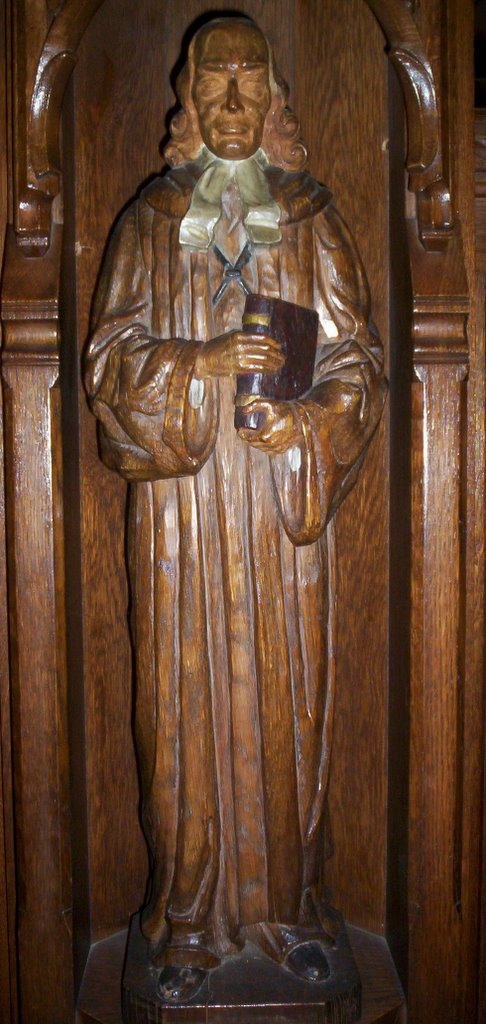
The more I learn about Methodism’s founder, John Wesley, the more I admire the man and the more apparent it becomes that his legacy has shaped who I am. John Wesley was both a theologian and a social reformer. You could say that he not only talked the talk, but that he also walked the walk.

One of Wesley’s contributions to theology was the concept of prevenient grace. Now, I don’t know about you, but prevenient isn’t a word that I use every day. It turns out that it means coming before or preceding. Prevenient grace is the love of God that already exists for each of us no matter who we are or what we have done. When we open ourselves to the experience of prevenient grace we are not tempted to sin. Salvation is an experience in the here and now, not just the promise of everlasting life.

Wesley’s concept was in contrast to the teaching of the theologian John Calvin - predominant amongst Protestants at the time - that grace is applied selectively to those whom God has determined to save.

Someone has found a pithy bumper sticker phrase to explain prevenient grace. I’m sure you’ve seen these bumper stickers: the one’s that say “Grace Happens.”

If you think being a Christian is about living by rules, then you’re missing the point. Because grace happens, anyone of us can be saved. You are saved when you allow yourself to be loved by God. You are not saved by getting the theology right. You are not saved by believing in the correct doctrine. You are not saved by belonging to the right church – not even Foundry. You are not saved by reading your bible every day, going to church on Sundays, taking communion, and praying before meals. Although, all those things will help you to feel grace happening.

I am trying to put all the pieces of our religion into their proper perspective. There will always be questions which we cannot answer. God warned us of this in Isaiah 55, verses 8 and 9: “For my thoughts are not your thoughts, neither are your ways my ways, says the LORD. For as the heavens are higher than the earth, so are my ways higher than your ways and my thoughts than your thoughts.”

We cannot always know what God wants of us. Christians will always disagree, but we can rest assured that God’s love is there for us when we are ready to accept it. Ours is a faith that is experienced – and the experience is waiting for us.

Thursday, July 07, 2005

Holy Boldness

Like many people in Washington, I work in politics. I also have a one track mind, so when I was asked to deliver the homily for this evening, the only thing I could think to speak about was politics and faith.

Now, don’t worry; I’m not going to make a plea for Christians to vote for candidates with progressive values. I’ve heard that plea from many others in recent months as I am sure all of you have too. You don’t need to hear it from me.

We have all heard that the nation has become polarized between a secular left on one side and a religious right on the other – in last fall’s election roughly three quarters of evangelical Protestants voted for one candidate while the same rate of Americans with no religious affiliation voted for the other. I don’t know about you, but I don’t belong in either of those groups. The truth is, small as they may be, there are also a religious left and a religious center.

I want to raise a concern that I haven’t heard anyone else address. My concern is not the impact that religion has on the outcome of elections, rather, my concern is about the impact that politics is having on religion in our society. Specifically, I have two concerns: One that the religious center is declining as the place where Americans of all political affiliations can find common ground and two that the non-religious – and those whose faith is not secure – will think that Christianity is an inherently political movement – concerned primarily with the accumulation of power – and that those people will be driven away from our churches rather than being drawn into them.

When I was growing-up in the Methodist church it never occurred to me that there was an inherent connection between religion and party identification. I believed at the time – and I still do believe it was true – that there were both Republicans and Democrats in my church. That is the way it should be. Society needs a place where we can find common ground on values - a place where we can talk about values outside of a political context.

The public discussion should be about how best to address society’s needs. Instead we seem to be moving into an ideological debate. Unfortunately, when we talk about the emergent split, a message is sent about religion that is inherently divisive. The message implicit in the way we talk about religion and politics in society today is that religion divides us. It doesn't have to be that way.

The emergent split of our society along religious and political lines isn’t good for our society and it isn’t good for our churches. This split was engineered for political purposes. It will take determination to reverse the trend.

The good news is that our Methodist tradition offers guidance as to how to respond to this situation. The answer is holy boldness – a favorite phrase of John Wesley’s – we know he used it in at least three of his sermons. Holy Boldness is being a Christian with integrity no matter what the challenges or circumstances. Holy boldness can be understood in terms of walking the walk and talking the talk.

Usually people are criticized for talking the talk without living the life they claim to live – the walking part of the analogy. In the Methodist churches where I have worshipped over the years I have often heard encouragements to do more to walk the walk – always good advice, but in my experience, we do O.K. at walking the walk. We don’t do so much talking the talk. We need to do more

My experience has been that there is a tendency not to speak openly about faith outside of church in our community of Methodists. I think other communities display this tendency, especially other mainline Christians. While I am sure this tendency is born in part out of genuine humility, it has also contributed to making the left and center of Christianity invisible. We need to raise our profile to show wider society that Christianity is more than just the religious right. We need to show that there is a vibrant religious center where people with different political identities and objectives can find common ground.

Learning holy boldness – in both words and deeds – has not come naturally to me. Indeed, I have far to go. I grew-up in a community that treated religion has a private matter. I am learning to be comfortable speaking-up, but I do believe it is important to do so. I do believe that holy boldness includes talking the talk, and that may be our most important contribution to the world right now.

In closing, from now on when I am confronted - either by those from the secular left, who believe that Christians do not truly love humanity, or by those from the religious right, who believe that progressives do not have faith, or even by those in the middle who feel they cannot reconcile their faith with their politics, I will speak up – with holy boldness – and say: “I am a believer. I feel the love of Jesus Christ and a love for humanity and it motivates and informs my actions in the world.”

Sunday, May 01, 2005

Why would I covet my neighbor's ass?

Exodus 17 - "You shall not covet your neighbor's house; you shall not covet your neighbor's wife, or his manservant, or his maidservant, or his ox, or his ass, or anything that is your neighbor's."

Thursday, April 28, 2005